NFSAWC 2026 — National Forensic Science Article Writing Competition
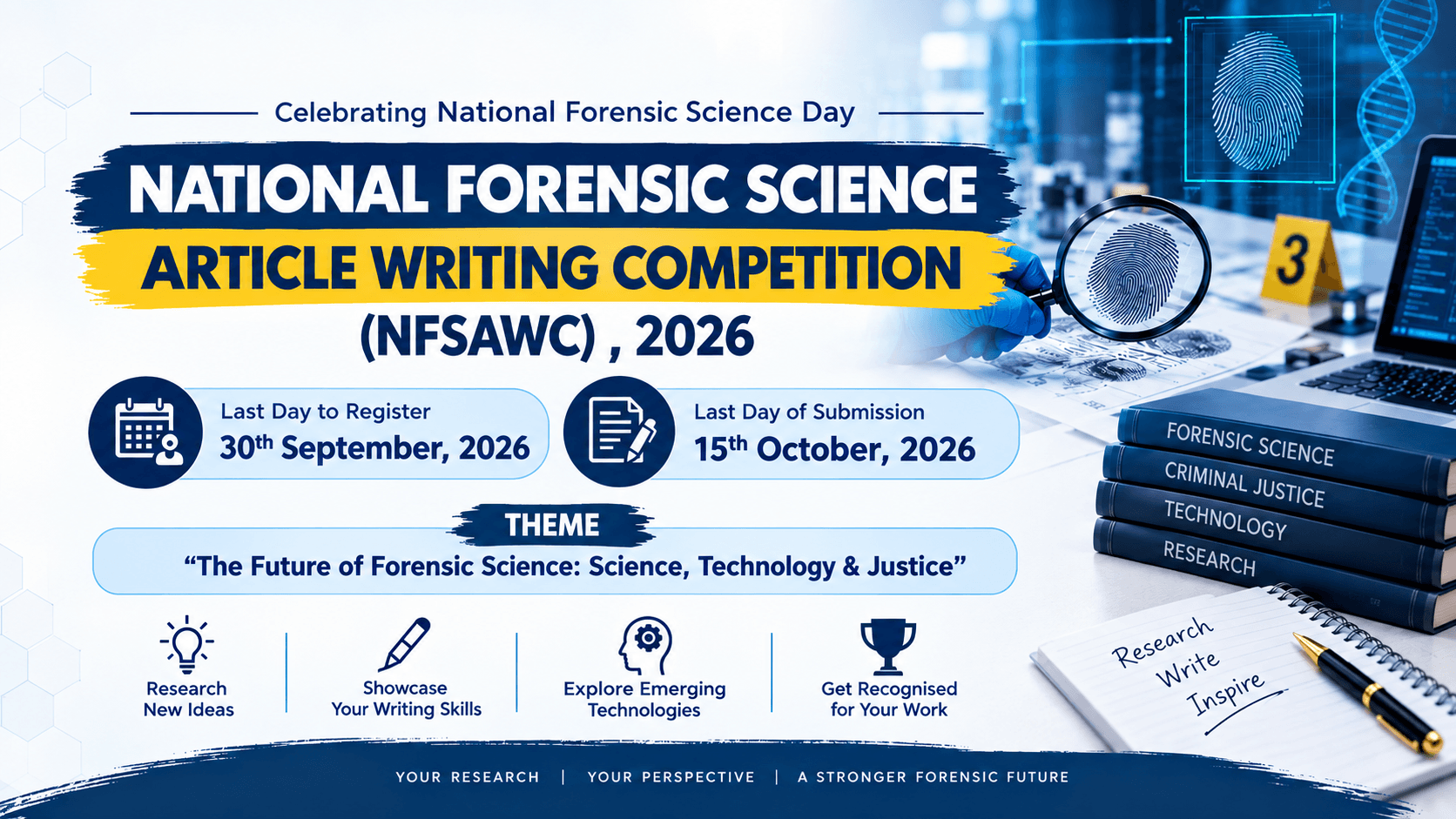
The Future of Forensic Science: Science, Technology & Justice
Date
30 September 2026
Mode
Online
Duration
Self-paced
About this course
A national-level article writing competition celebrating National Forensic Science Day, organised by LexFunis and Forensic Live. Pick one of 43 suggested topics — from AI-assisted investigation, deepfakes and IoT evidence to DNA databases and forensic psychology — or propose your own within the theme, and research, write and share your perspective on where forensic science is heading. Articles of 1,000–1,500 words in English or Hindi, individual participation only, evaluated out of 100 on originality, research accuracy, depth of analysis and relevance to the theme. The top 3 performers get their article published on the Forensic Live website (subject to editorial review) and free access to the Advanced Digital Forensics & Cybersecurity Certification Course; participants who submit a valid article may receive a Certificate of Participation.
Highlights
What you'll learn
Learning Outcomes
Suggested Topics
Forensic Science & Emerging Technology
- The Future of Forensic Science: What Will Investigation Look Like in 2035?
- Artificial Intelligence in Forensic Science: Opportunities and Challenges
- AI-Assisted Forensic Investigation: Can Technology Transform Criminal Justice?
- The Role of Emerging Technologies in Modern Crime Scene Investigation
- Robotics and Drones in Forensic Investigation
- 3D Crime Scene Reconstruction: The Future of Evidence Documentation
- Virtual Reality and Augmented Reality in Forensic Science
Digital Forensics & Cybercrime
- The Future of Digital Forensics in the Age of Artificial Intelligence
- Digital Footprints: The New Evidence in Criminal Investigations
- Deepfakes and Synthetic Media: A New Challenge for Digital Forensics
- Cybercrime Investigation in 2035
- Cloud Forensics: Challenges in Investigating Evidence Beyond Physical Devices
- Cryptocurrency and Blockchain in Forensic Investigations
- AI-Generated Crimes and the Future of Digital Evidence
DNA & Biological Forensics
- The Future of DNA Evidence in Criminal Investigations
- Rapid DNA Technology: Opportunities and Limitations
- Forensic Genetics and the Future of Human Identification
- DNA Databases and Criminal Investigations: Benefits and Challenges
- Forensic DNA and Privacy: Finding the Right Balance
Forensic Science & Justice
- From Crime Scene to Courtroom: The Journey of Forensic Evidence
- Forensic Science and Wrongful Convictions: Can Science Help Prevent Miscarriages of Justice?
- The Role of Forensic Evidence in Modern Criminal Justice
- Forensic Evidence and the Right to a Fair Trial
- Challenges in Maintaining the Integrity of Forensic Evidence
- Forensic Science as a Bridge Between Science and Justice
Specialised Forensic Disciplines
- The Future of Forensic Toxicology
- Forensic Anthropology and the Future of Human Identification
- The Future of Forensic Psychology in Criminal Investigation
- Environmental Forensics: Investigating Crimes Against the Environment
- Forensic Ballistics in the Age of Advanced Technology
- The Future of Forensic Odontology
- Questioned Documents Examination in the Digital Age
- Forensic Entomology and Its Role in Modern Investigations
Emerging & Cross-Disciplinary Directions
- Quantum Computing and the Future of Encrypted Digital Evidence
- Internet of Things as a Witness: Evidence from Smart Homes and Wearables
- Forensic Genetic Genealogy: Solving Cold Cases and the Privacy Debate
- Vehicle Forensics: Evidence from Connected Cars and Telematics
- Voice-Cloning Fraud: Forensic Detection of Synthetic Audio
- LiDAR, Photogrammetry and the Automated Crime Scene
- Explainable AI: Making Algorithmic Forensic Evidence Courtroom-Ready
- Social Media Forensics: Platform Data, Privacy, and Legal Process
- Blockchain for Chain of Custody: Tamper-Evident Evidence Management
- AI Literacy for the Courtroom: Training Investigators, Forensic Scientists and Judges